
Many homeowners with older solar panel systems would like to generate more electricity or add battery storage, but worry that making changes will cancel their existing Feed-in Tariff payments.
The good news is that it is possible to expand an existing solar panel system without losing the Feed-in Tariff accreditation on the original installation. The new panels are treated separately, so they will not receive FIT payments, but the original accredited system can usually continue under its existing arrangement.
The important part is making sure the extension is designed, metered and reported correctly.
Why add to an existing solar system?
Solar technology and household energy use have changed considerably since many Feed-in Tariff systems were installed.
Your original system may still be working well, but it might no longer produce enough electricity for your needs. You may now have an electric vehicle, work from home more often, use a heat pump or simply want to reduce the amount of electricity you buy from the grid.
Adding more panels can help you:
- Generate more of your own electricity
- Reduce your reliance on grid energy
- Support higher household energy use
- Produce more energy for battery storage
- Prepare for higher future electricity use
- Make better use of available roof space
An existing system does not necessarily need to be removed or replaced. In many cases, a separate, carefully designed extension can work alongside it.
What happens to the existing Feed-in Tariff?
The Feed-in Tariff remains linked to the original accredited system.
Any new panels added now will not qualify for FIT payments, but this does not automatically mean the original tariff is lost. The additional system simply needs to be accounted for separately.
Depending on the electrical design, the original and new systems may use separate generation meters, or the readings may need to be divided according to the capacity of each system.
Your FIT provider should also be told about the proposed changes before work begins. For most domestic MCS-FIT installations, this means contacting the electricity supplier responsible for making your FIT payments.
Because every installation is different, it is important to check the existing inverter, meters and electrical layout before deciding how the extension should be connected.
Put simply:
Your original panels can remain on their existing FIT arrangement. The new panels are treated as additional, non-FIT capacity.
Why metering matters
The most important part of extending a FIT system is making sure electricity from the original installation can still be accounted for correctly.
Where the original panels and the additional panels share a generation or export meter, the readings may need to be divided according to the capacity of each system. This is known as proration.
For example, if the FIT-accredited panels represent half of the total solar capacity measured by a shared meter, only the appropriate proportion of the reading would qualify for FIT payments.
Ofgem confirms that shared readings can be prorated, but the actual FIT payments may be affected where separate metering is not possible.
This is why it is important to have the extension assessed and designed by an experienced installer. The electrical layout, inverter arrangement and metering all need to be considered before work begins.
A recent Somerset installation
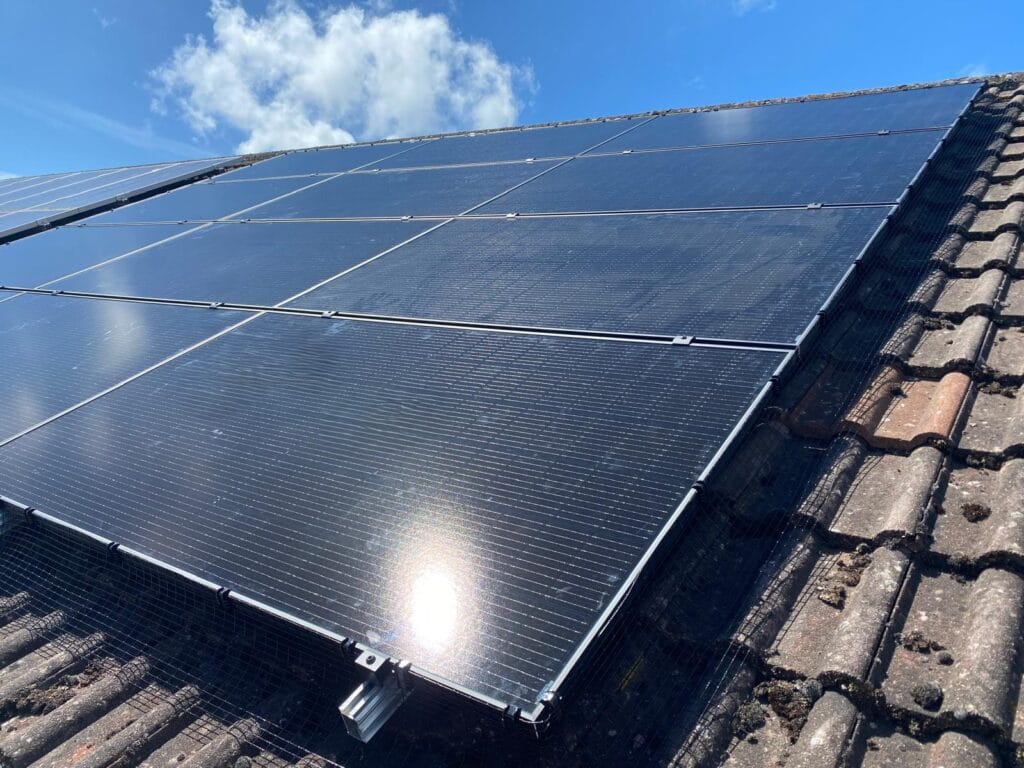
For this property, the customer already had a working solar panel system receiving Feed-in Tariff payments. They wanted to increase their generation and store more energy for use later in the day.
Our local, family-run Somerset team designed an additional system around the property and the customer’s needs.
The system extension included:
- 12 additional JA Solar panels
- 370W per panel
- 4.44kWp of additional solar capacity
- One Tesla Powerwall 3
- 13.5kWh of usable battery storage
The additional panels were estimated to generate around 3,700kWh of electricity each year. When combined with the customer’s existing system, the proposal estimated first-year solar generation of approximately 6,695kWh.
The modelling also estimated that the combined solar system could generate the equivalent of 104% of the household’s annual electricity consumption, up from 47% with the original system alone. With the Tesla Powerwall 3 included, estimated grid independence increased to around 70%.
These figures are specific to this property and are based on its electricity use, roof orientation, expected generation and the assumptions used within the proposal.
Why include battery storage?

Solar panels produce electricity during the day, but household demand often continues into the evening.
A battery stores surplus solar energy so it can be used later, rather than being sent straight to the grid. This can help the household use more of its own renewable electricity and buy less from its energy supplier.
For this installation, the Tesla Powerwall 3 also provided the inverter for the new solar array, allowing the additional panels and battery storage to operate together as one well-designed system.
Battery storage can be added to many existing FIT installations, but the existing metering and tariff arrangements still need to be checked carefully.
Can the additional panels receive export payments?
Although new panels cannot be added to the original FIT accreditation, electricity exported by the additional system may be eligible for a Smart Export Guarantee arrangement, depending on the system design, metering and chosen supplier.
Care is needed because the same exported electricity cannot receive both FIT export payments and Smart Export Guarantee payments. Some homeowners choose to keep their FIT generation payments while opting out of FIT export payments and using a suitable metered export tariff instead. The right arrangement will depend on the existing FIT terms and how the systems are metered.
It is sensible to speak to your FIT licensee before making changes or switching export arrangements.
Every FIT extension needs an individual assessment
There is no single design that will suit every property.
Before recommending an extension, we consider:
- The size and condition of the original solar system
- The existing inverter and metering arrangements
- Available roof space and orientation
- Household electricity consumption
- DNO requirements and permitted export capacity
- Whether battery storage would provide a worthwhile benefit
- How the extension could affect the calculation of FIT payments
We can then explain the available options clearly, including any limitations, before the customer makes a decision.
Thinking about adding to your solar panel system?
Having a Feed-in Tariff does not necessarily prevent you from adding more panels or battery storage.
With the right design, metering and advice, the original FIT arrangement can often remain in place while the new equipment is treated separately.
Sunlit Solar is a local, family-run Somerset business with more than 20 years’ experience of solar installation. We install well-designed systems using quality equipment built to last, with long-term support from our office and installation teams.
To discuss adding to an existing solar panel system, contact us:
Telephone: 01458 834 936
Email: info@sunlit-solar.co.uk
Website: www.sunlit-solar.co.uk
Feed-in Tariff and export arrangements vary between installations. Customers should confirm any proposed changes with their FIT provider before altering an accredited system. Generation, savings and grid-independence figures are estimates and will vary according to the property, weather, energy use and electricity tariff.