

Five years after installing their Sunlit Solar system, a Somerset homeowner and his family have shared an update on how their solar investment has performed over the long term. The results show how a well-designed system, combined with battery storage, an electric vehicle and smart energy tariffs, can significantly reduce energy costs and reliance on fossil fuels.
The original installation
Back in May 2021, we designed and installed a bespoke SolarEdge system to help this Somerset household generate more of their own electricity and reduce their dependence on the grid.
With a 5.55 kWp solar system installed, alongside a hot water diverter, the results were immediate. The system was generating more electricity than the household used over the course of a year (around 5.5MWh produced compared to 4.5MWh consumed), with surplus energy helping to reduce reliance on gas for hot water.
“We started it for environmental reasons, but quickly realised it made financial sense as well.”
Over the past five years, the system has generated thousands of kilowatt-hours of clean electricity, significantly reducing the household’s reliance on the grid and avoiding more than 5.6 tonnes of CO₂ emissions.

Making the Most of Every Unit of Energy
From the beginning, the system was designed to make the most of every unit of energy produced. Rather than simply exporting surplus electricity back to the grid, the hot water diverter ensured that excess generation was used to heat water within the home. It was an efficient setup, but it soon became clear that there was still more potential to unlock.
Taking the Next Step: Adding Battery Storage
Like many solar households, a portion of the energy generated during the day was still being exported, only to be bought back later in the evening when demand increased. The solution was simple: store it!
Adding battery storage allowed the homeowner to take the next step.
A 10 kWh SolarEdge battery was installed and integrated with the existing system, enabling energy generated during the day to be stored and used when it was needed most: in the evenings, early mornings and during peak usage times.
“The idea was to use as much of our own electricity as possible before giving any back to the grid.”
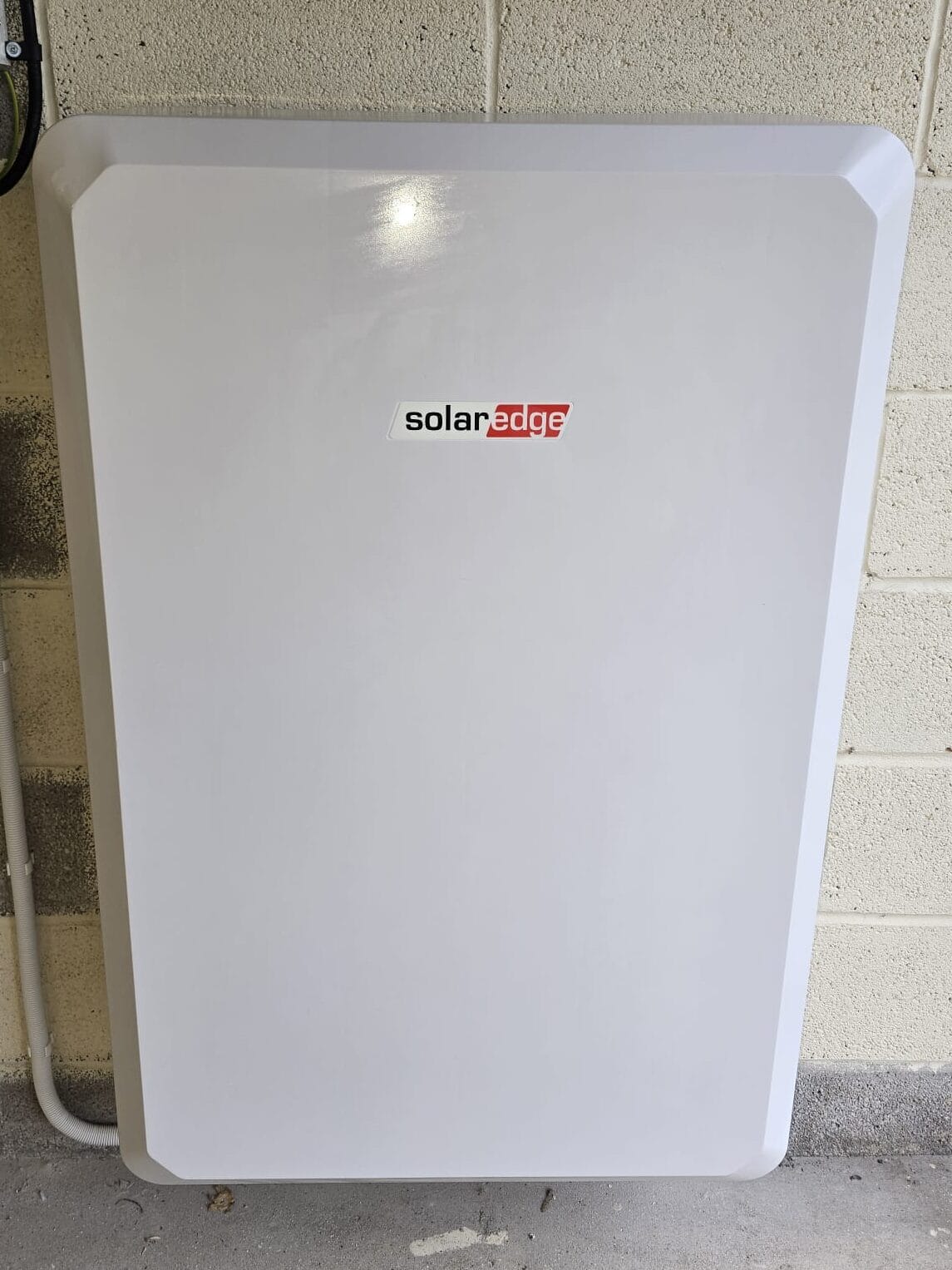
The system was upgraded with a 10 kWh SolarEdge battery, which was integrated into the customer’s existing solar setup.
The Impact: A Dramatic Drop in Grid Reliance
The impact of adding battery storage was significant.
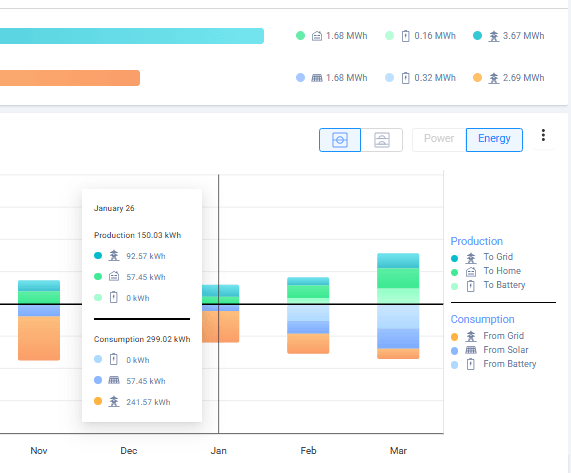
January: Before Battery Installation
This graph shows the home’s energy usage before battery storage was added.
During this period, the property relied more heavily on electricity from the grid, with around 242 kWh imported over the month. While the solar panels were still generating energy, much of it was exported rather than used later in the day.
March: After Battery Installation
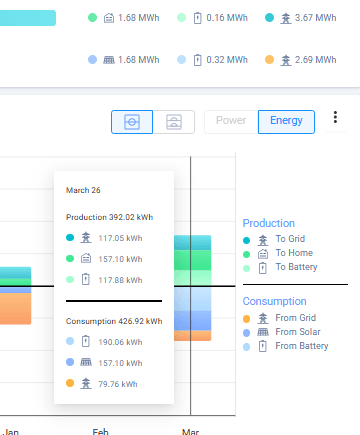
Following the addition of battery storage, grid reliance dropped significantly.
In March, grid import reduced to just 80 kWh, as more of the solar energy generated during the day was stored and used later. This demonstrates how battery storage can dramatically increase self-consumption and reduce reliance on the grid.
This represents a reduction of around 67% in grid electricity usage in just a couple of months.
It’s a simple change in principle, but a powerful one in practice. More of the energy generated by the solar panels is now used within the home, less is exported unnecessarily, and reliance on the grid is significantly reduced.
Taking It One Step Further with Smart Tariffs
The customer also paired the system with a smart tariff (Octopus Flux), allowing them to further optimise how and when energy is used. The tariff allows the homeowner to charge the battery at cheaper overnight rates, use stored energy during peak pricing periods and export electricity at more favourable rates when appropriate.
This combination of solar + battery + smart tariff creates a much more efficient and cost-effective system overall.
Simple to Add, Easy to Use
One of the most notable aspects of the upgrade for the homeowner was how straightforward adding the battery storage felt:
“It was easy and quick to install. Everything was in stock. We only looked into it a couple of weeks before.”
The Solar Edge monitoring app has also made a big difference:
“The app is amazing. You can see exactly what the panels are doing. It’s really easy to use and understand.”
The impact of switching to an electric vehicle

Since installing solar, the family has also switched to an electric vehicle, now driving a Volkswagen ID.3.
In 2025, they calculated their average running costs at just 6.5p per mile, including some charging away from home. Compared to the estimated cost of running their previous diesel vehicle, the savings have been substantial.
The environmental benefits have also been significant, with thousands of miles now powered by renewable electricity.
Real-world performance over five years
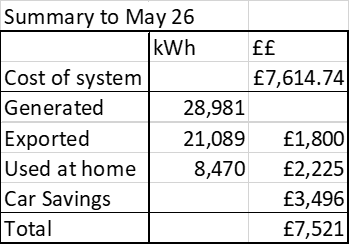
The customer’s figures demonstrate how a well-designed solar system can continue delivering value many years after installation. After only 5 years, they have almost paid the system off.
Lessons learned
Looking back over the past five years, Frank has identified a few things he might consider differently if starting again:
- Installing a larger array would have improved winter generation
- Some panels experience shading from a neighbouring property during winter months
- Alternative panel positioning may have slightly improved winter performance, although the current layout provides a neat, symmetrical appearance
This highlights why every property benefits from a bespoke design that carefully balances aesthetics, available roof space and energy generation.
More Than Just the Numbers
While the financial benefits are clear, there’s also a wider sense of satisfaction that comes with the system.
“It makes both emotional and financial sense and you feel like you’re doing the right thing.”
So, Is Battery Storage Worth It?
This project is a good example of how solar doesn’t have to be a one-step decision. Starting with panels and a hot water diverter laid a strong foundation, and adding battery storage later has allowed the homeowner to take even greater control of their energy use to:
- Reduce reliance on the grid
- Lower electricity and gas bills
- Increase energy independence
- Make better use of the energy you generate
With falling battery prices and VAT-free installations, it’s becoming an increasingly attractive option for homeowners.
Could you be getting more from your system?
If you already have solar panels, adding battery storage could help you unlock even more value from your system, just like this customer.
Our Somerset-based team can assess your current setup and recommend the best way to improve performance, savings and independence.
Get in touch for clear, honest advice on upgrading your solar system.
Phone: 01458 834 936
Email: info@sunlit-solar.co.uk
Website: www.sunlit-solar.co.uk
